


Institution: Harvard Smithsonian Centre For Astrophysics (CfA) / Université Côte d’Azur (UCA)
Project Title:
Detecting False Positives With Derived Planetary Parameters: Experimenting with the Kepler Dataset
Supervisor:
Dr. Zachary Murray
Duration:
- June 2024 – October 2024 (CfA)
- November 2024 – September 2025 (UCA)
Description:
Recent developments in computational power and machine learning techniques motivate their use in many different astrophysical research areas.
Consequently, many machine learning models have been trained to classify exoplanet transit signals – typically done using time series light curves. In this work, we attempt a different approach and try to improve the efficiency of these algorithms by fitting only derived planetary parameters, instead of full time-series light curves. Our feature list includes parameters such as stellar radius, odd-even depth comparison statistic, transit duration, and transit depth. We investigate and evaluate 4 models (Logistic Regression, Random Forest, Support Vector Machines, and Convolutional Neural Networks) on the KEPLER dataset, using precision-recall and accuracy metrics, after hyper-parameter optimisation. We show that this approach can identify up to ≈ 90% of false positives, implying the planetary parameters encompass most of the relevant information contained in a light curve. Random Forest (RF) and Convolutional Neural Networks (CNN) produce the highest accuracy and the best precision-recall trade-off, with RF having a validation accuracy of 87.8% and the best CNN model a validation accuracy of 92.2%. We also note the accuracies as a function of four critical flags in the Kepler dataset: not-transit-like, stellar eclipse (SS), centroid offset (CO), and ephemeris match contamination (EC). We note that the accuracy as a function of the SS flag has the best performance for all the models, while the CO and EC flags exhibit poor performance across all model architectures.
Output:
- Manuscript available on arXiv: https://doi.org/10.48550/arXiv.2508.13801
- First-Author manuscript published in Open Journal of Astrophysics (OJA): https://astro.theoj.org/article/154054-detecting-false-positives-with-derived-planetary-parameters-experimenting-with-the-kepler-dataset
- Abstract accepted for Oral Poster Presentation at the 247th Meeting of the American Astronomical Society (AAS) in Phoenix, Arizona https://submissions.mirasmart.com/AAS247/Itinerary/EventDetail.aspx?evt=103


Institution: University College London (UCL)
Project Title:
AstroThink: Can Large Language Models Reason Their Way Through Astrophysics Olympiad Problems?
Supervisor:
Dr. Taner Shakir
Duration:
August 2025 – October 2025
Description:
State of the Art (SOTA) benchmarks and models exist for solving olympiad problems from many domains such as mathematics (IMO), informatics (IOI), and physics (IPhO). There are only some benchmarks available for the astrophysics domain, which only partially support astronomy. These efforts inculcate multiple choice questions and single-word answers, which often only test memory instead of conceptual understanding and breadth of knowledge. The International Olympiad of Astronomy and Astrophysics (IOAA) 2024 question paper includes problems that require in-depth thinking and robust conceptual foundations. We present a comprehensive evaluation of SOTA Large Language Models’ (LLMs) performance on the IOAA questions, using a two-fold validation scheme, encompassing both human annotators and LLM judges, along with a qualitative grading criteria to identify the most common points of failure in numerical calculations and reasoning steps. None of the chosen LLMs could achieve medal-level performance (top 50% or above percentile for scores, calculated from a reference score), and struggled significantly with the reasoning part of each problem. The best performance was achieved by DeepSeek-V3.1 with 44.83%. Hence, current LLMs are incapable of reasoning through astrophysics olympiad problems, since they suffer from logical errors, utilisation of irrelevant approaches, and contextual misunderstanding.
Output:
- Under peer review in Artificial Intelligence Review https://link.springer.com/journal/10462
- Accepted for Oral presentation at the 18th International Conference on Machine Learning and Computing (ICMLC) 2026 in Nanjing, China https://www.icmlc.org/

Institution: NASA-Infrared and Processing Centre, Caltech
Project Title:
Using Transfer Learning Based Approaches To Predict Planetary Parameters For Accurate Exoplanet Atmospheric Retrieval
Supervisor:
Nicholas Susemiehl
Duration:
June 2025 to date
Description:
Investigating and optimising deep neural network and transformer architectures for atmospheric retrieval in terms of biosignatures such as CO2 abundance. The models are trained on up to 3,000,000 spectra from the PSG/INARA dataset.
Output:
- Results in compilation


Institution: University College London Hawkes Institute of Medical Robotics
Project Title:
BOB-RFM: Bayesian-Optimisation Based Random Forest Model For Surgical Skill Classification, Using Novel Acceleration-Based Features
Supervisor:
Dr. Evangelos Mazomenos
Duration:
July 2024 to date
Description:
We used JIGSAWS, which contains kinematic data for suturing, knot tying and needle passing dry-lab procedures in robotic surgery, including Global Rating Score (GRS) annotations. New features were derived from the raw data which included cartesian linear accelerations, tortuosity using cumulative successive path lengths, intensity of instantaneous accelerations and average tip travel distance as an euclidean distance function for all the arms.
Bayesian-Optimisation Based Random Forest Model (BOB-RFM) acted as a skill level classifier on 3 balanced classes, which were made based on the GRS score. A cross-validation scheme of fitting 5 folds for each of the 25 candidates was used. For Knot tying, [Class 1 (6-11), Class 2 (12-18) and Class 3 (19-30)], we achieved the highest accuracy of 83.3%, with a perfect precision for class 2 and 3, and a F1-score of 67% for class 2, which is the highest for the procedure (p=0.001 and 0.002 for the comparisons between Class 1 and 2 and between Class 1 and 3, respectively). For class 1 vs 3, we obtain a p value of 0.001, 0.008, 0.065 and 0.006 for CTA values of PSM1, PSM2, left MTM and right MTM, respectively. For needle passing, [Class 1 (6-11), Class 2 (12-14) and Class 3 (15-30)] our model predicts an accuracy of 66.7%, including a precision score of 1.00 for class 3, and a F1-score of 0.80 for Class 1 (p=0.23 for Class 1 vs Class 3 and p=0.696 for the same class comparison for combined MTM values). For suturing, [Class 1 (6-15), Class 2 (16-19) and Class 3 (20-30)] the model outputs a poor accuracy of 33% with a F1-score of 0.66 for Class 3, with relatively inconsistent and imbalanced performance across all the classes (p=0.207 for combined PSM for Class 1 vs 2; p=0.057 for combined MTM for class 1 vs 3)
Output:
- International Oral Podium Presentation at Society of Robotic Surgery Annual Meeting 2025 in Strasbourg, France https://sroboticsorg.eventscribe.net/fsPopup.asp?efp=RVJZQ05PUkcyNDM5MQ&PresentationID=1657611&rnd=0.1617437&mode=presInfo
- Manuscript write up in progress.


Institution: Norfolk and Norwich University Hospital, Norwich
Project Title:
Sustainibility in Surgery: Problems, Solutions and Recommendations
Supervisor:
Dr. Kaso Ari
Duration:
June 2025 to August 2025
Description:
The healthcare sector contributes significantly to global carbon emissions, with surgical care representing a substantial portion of this environmental impact. This review examines the environmental challenges associated with modern surgical practice, exploring issues related to operating room waste, energy consumption, pharmaceutical waste, and the use of single-use devices. We analyse current solutions being implemented across healthcare systems, including waste reduction strategies, energy-efficient practices, sustainable procurement, and circular economy approaches. Finally, evidence-based recommendations are provided for healthcare administrators, surgical teams, and policymakers to create more environmentally sustainable surgical practices while maintaining high standards of patient care. This article emphasizes that sustainable surgical practice is not only an environmental imperative but also presents opportunities for cost savings and improved healthcare delivery.
Output:
- Published in Cureus https://pubmed.ncbi.nlm.nih.gov/41209917/
Institution: Norfolk and Norwich University Hospital, Norwich
Project Title:
Artificial Intelligence Driven Approaches to Managing Surgeon Fatigue and Improving Performance
Supervisor:
Dr. Kaso Ari
Duration:
September 2024 to November 2024
Description:
Surgeon fatigue significantly affects cognitive and motor functions, increasing the risk of errors and adverse patient outcomes. Traditional fatigue management methods, such as structured breaks and duty-hour limits, are insufficient for real-time fatigue detection in high-stakes surgeries. With advancements in artificial intelligence (AI), there is growing potential for AI-driven technologies to address this issue through continuous monitoring and adaptive interventions. This paper explores how AI, via machine learning algorithms, wearable devices, and real-time feedback systems, enables comprehensive fatigue detection by analysing physiological, behavioural, and environmental data. Techniques such as heart rate variability analysis, electroencephalogram monitoring, and computer vision-based behavioural analysis are examined, as well as predictive models that provide proactive solutions. These AI-driven systems could suggest personalized break schedules, task redistribution, and interface adaptations in response to real-time fatigue indicators, potentially enhancing surgical safety and precision. However, ethical challenges, including data privacy and surgeon autonomy, must be carefully navigated to foster acceptance and integration within clinical settings. This review highlights AI’s transformative potential in optimizing fatigue management and improving overall outcomes in the operating room.
Output:
- Published in Cureus https://pubmed.ncbi.nlm.nih.gov/39811216/


Institution: Aitchison College
Project Title:
Robotic Prosthetic Arm With 4 Degree of Freedom Rotational Movement
Supervisor:
Independent Project
Duration:
June 2024 to August 2024
Description:
This paper presents a cost-effective approach to developing a prosthetic robotic arm using Arduino-based components for individuals requiring upper limb rehabilitation. The high cost of commercial prosthetic devices makes them inaccessible to many patients, especially in low-income countries. To address this challenge, we propose a simplified 4 degree-of-freedom (DOF) robotic arm prototype that provides 180-degree rotational capability for basic daily tasks during the post-surgical recovery phase. The system utilizes an Arduino nano-microcontroller as the primary control unit, integrated with four servo motors arranged in a radial and lateral configuration to enable movement along four axes. Wireless communication is achieved through a HC-05 Bluetooth module, allowing virtual movement via an Android application with simple numerical commands. The robotic arm structure is fabricated using 3D-printed plastic components, significantly reducing manufacturing costs while maintaining functional integrity. The system operates through Pulse Width Modulation (PWM) signals with frequencies of 50 Hertz. Testing demonstrates successful execution of basic manipulation tasks including gripping, lifting and positioning objects within the operational workspace. This design offers a practical and affordable alternative for post-amputation rehabilitation, providing patients with essential motor functionality.
Output:
- Published in International Research Journal of Engineering and Technology (IRJET) https://www.irjet.net/archives/V12/i7/IRJET-V12I725.pdf
Institution: Aitchison College
Project Title:
Gyro Sensor Based Smart Helmet For Automated Early Accident Detection
Supervisor:
Independent Project
Duration:
June 2024 to August 2024
Description:
The number of worldwide motorcycle accidents is increasing every year, which necessitates the need of safety procedures such as wearing helmets. The integration of Internet of Things (IoT), Artificial Intelligence (AI), Automated Detection and Machine Learning (ML) into this field has improved safety and efficiency, with the help of smart helmets. Our approach proposes an Arduino-based helmet that provides early accident-detection through the use of a gyro sensor to measure the accelerations in all directions. This system continuously monitors for any variations from the gyro offsets and the upper and lower thresholds defined for each direction (x, y and z): a positive detection would lead to the GSM module connecting to a pre-defined SIM network, along with the GPS module for location coordinates, to send a message to the user’s emergency contact as soon as the accident is detected. Thus, the message would act as an early warning system that would also include the map latitude and longitude coordinates. This setup provides high accuracy and precision, with constant monitoring of the angular velocities at a set frequency.
Output:
- Published in International Research Journal of Engineering and Technology (IRJET) https://www.irjet.net/archives/V12/i1/IRJET-V12I173.pdf
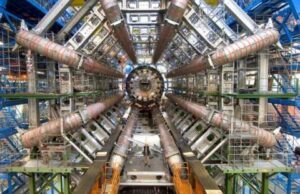

Institution: CERN ATLAS Collaboration, California State University
Project Title:
Investigating The Use of Graph Neural Networks and Gradient Boosting Classifiers in Particle Identification Through Scintillators and Calorimeters in Beamline
Supervisor:
Dr. Shahzad Ali
Duration:
December 2024 – April 2025
Description:
Using Machine-Learning based techniques in graph theory to detect particles more accurately in synchrotrons and in beamlines, using their intrinsic properties such as momentum and energy levels, utilising simulations in ROOT
Output:
- Research Proposal Submitted to CERN


Institution: Queen Mary University of London
Project Title:
Deriving a functional-calculus based approach to solving the Brachistochrone problem
Supervisor:
Dr. Mariem Magdy
Duration:
September 2024 – November 2024
Description:
Using Functional Calculus to solve the brachistrone problem, utilising integration techniques and arc length definitions
Output:
- Wrote an expository paper